A breathalyzer (in Turkish alkolmetre, also called promil ölçer) does not measure the alcohol in your blood. It measures alcohol in air from deep in your lungs and converts that value into promille (‰) with a fixed factor, so the number is an estimate.
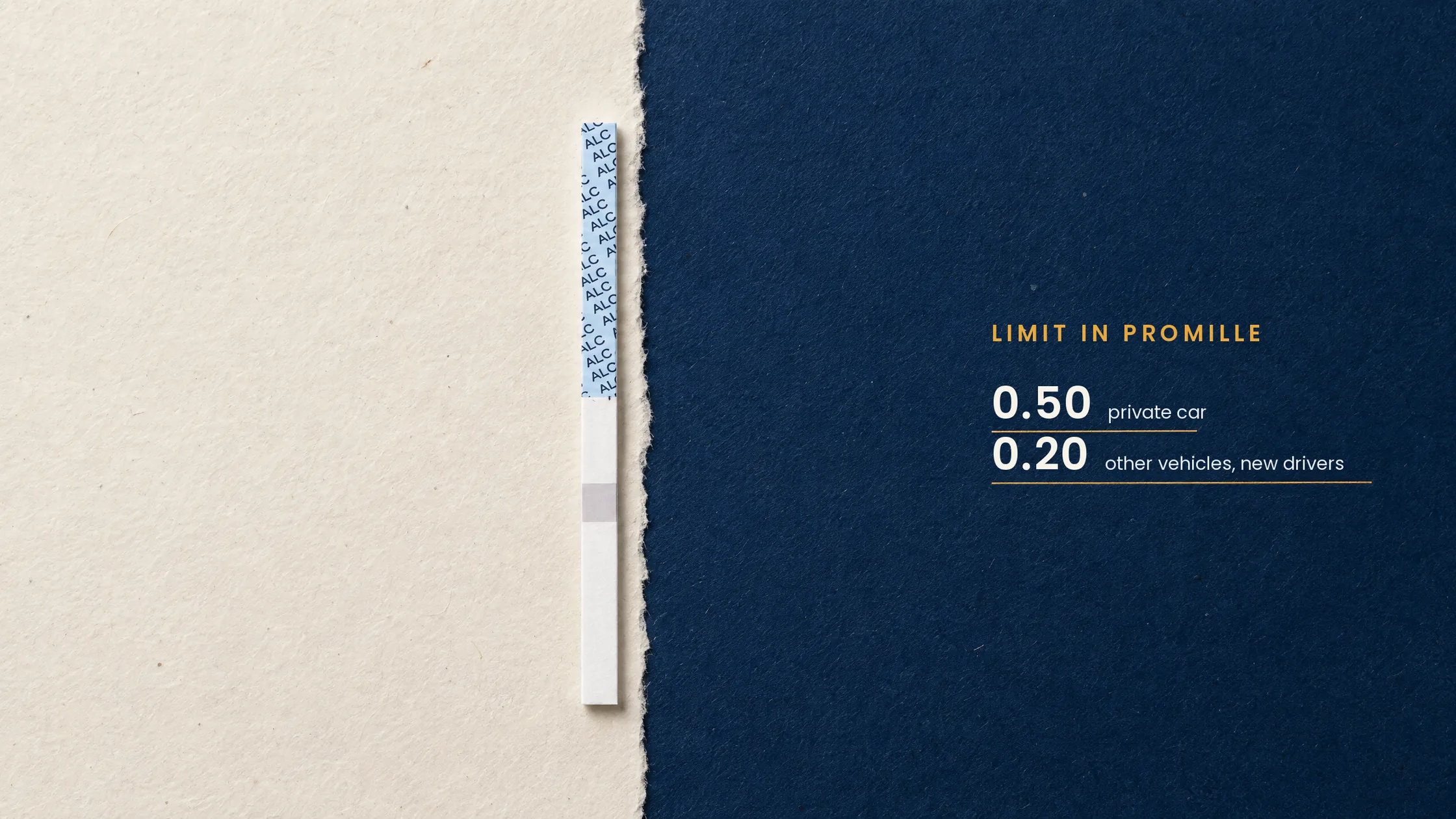
How close it comes to your real blood alcohol depends on the sensor, on calibration and on whether alcohol is still in your mouth. In Turkey the limit is 0.50‰ for private car drivers and 0.20‰ for other drivers (Turkish Traffic Department); novice drivers in their first two licensed years are held to 0.20‰ in any vehicle (limits and penalties in Turkey). No personal test, breathalyzer or saliva strip, tells you that you are fit to drive.
This guide explains the measuring principle and its limits for drivers in Turkey, for example before buying a device. It does not compare or recommend device models.
What does a breathalyzer measure?
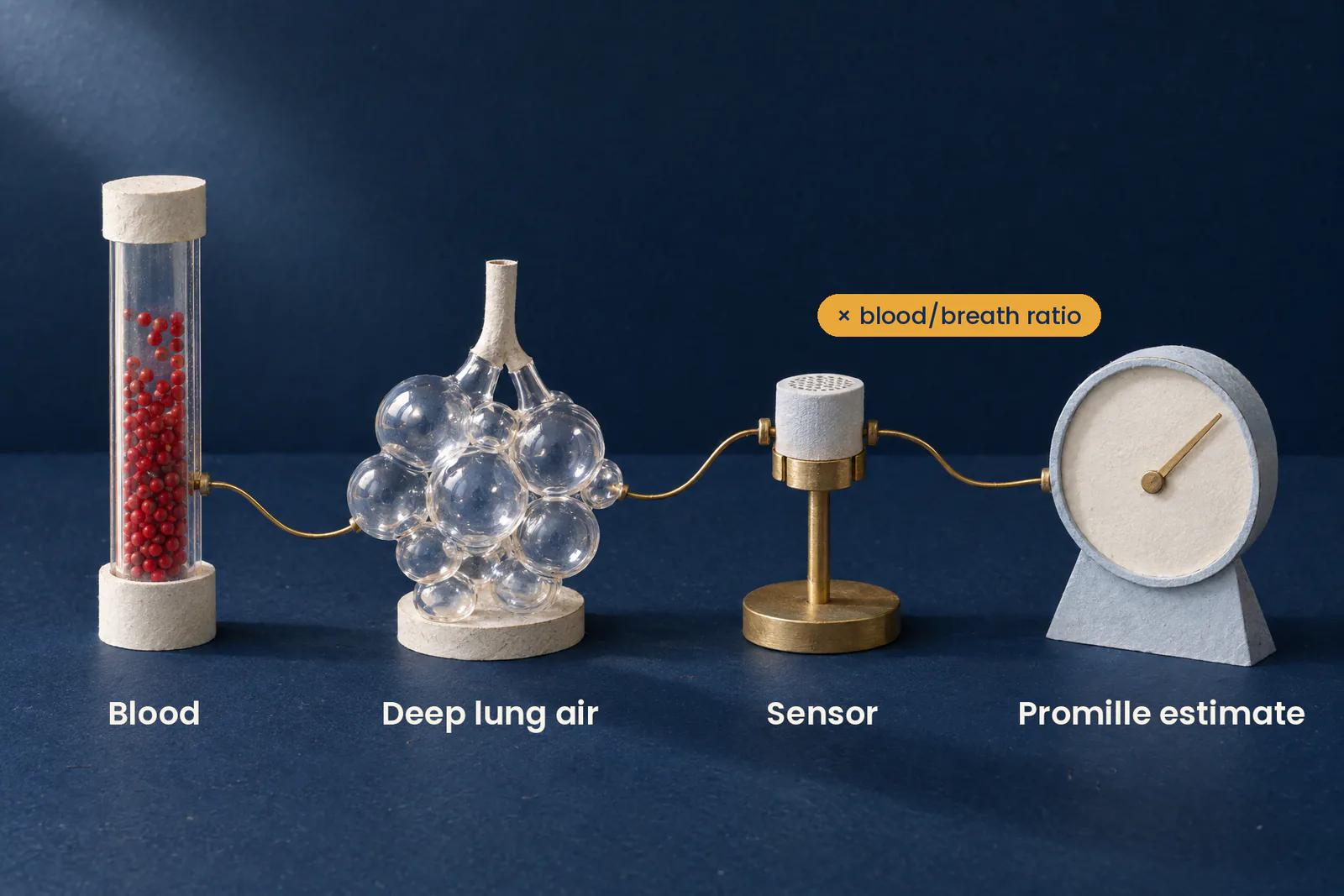
A breathalyzer measures the concentration of ethanol in deep lung air and converts it into blood alcohol in promille with a fixed blood-to-breath ratio. The number on the display is therefore a converted estimate of blood alcohol, not a direct blood measurement.
When you drink, ethanol passes from the stomach and small intestine into the blood. In the lungs, blood and the air in the tiny air sacs (alveoli) exchange gases, so part of the ethanol moves into that air. When you blow out long and steadily, the last part of the breath comes from this deep lung air. Breathalyzers are designed to sample the end of such a long exhalation.
The device then needs one more calculation. Turkish limits are stated as blood alcohol in promille: 0.50‰ means 50 milligrams of alcohol in 100 millilitres of blood (Turkish Traffic Department). To turn a breath value into a blood value, the device multiplies by a fixed blood-to-breath ratio. Countries chose different ratios, including 2000:1, 2100:1, 2300:1 and 2400:1 (Jones 2025, PMID 40750099).
In a large study of drinking drivers, the measured average ratio was about 2400:1, higher than the 2000:1 to 2300:1 many countries assumed (Jones 2000, PMID 26256024). Individual ratios vary around that average (Jones 2025).
Breathalyzer working principle: the three sensor types
Breathalyzers detect alcohol in one of three ways: a heated semiconductor that changes its resistance, an electrochemical fuel cell that produces a current, or infrared light that ethanol absorbs. In a 1989 test of one device of each type, none could tell methanol from ethanol.
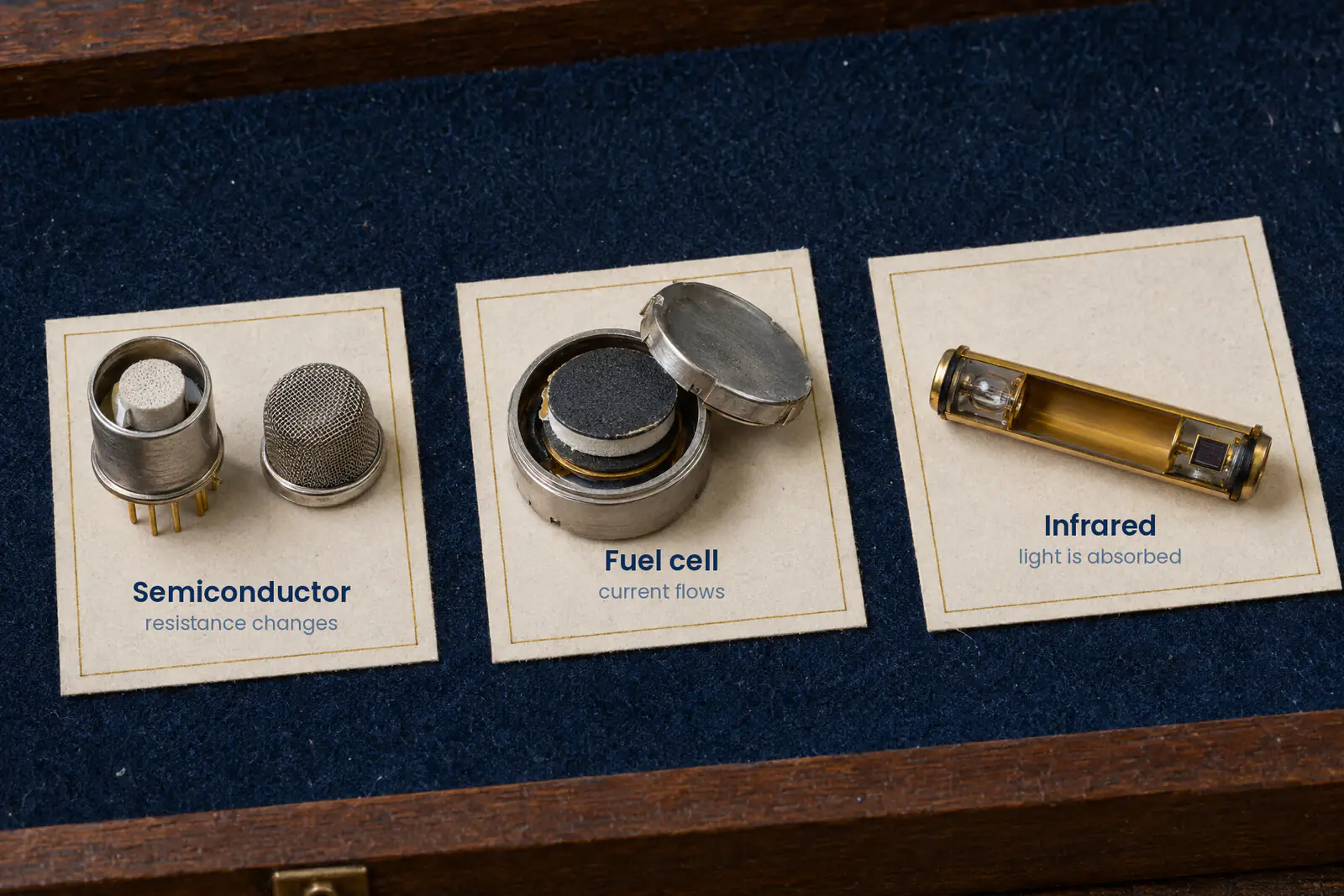
That forensic study tested one semiconductor, one fuel-cell and one infrared instrument (Jones 1989, PMID 2760587). The descriptions below explain the measuring principle; they are not a ranking of devices.
Semiconductor sensor
A heated metal-oxide layer changes its electrical resistance when alcohol molecules land on it, and the device converts that change into a number. These sensors are cheap and small. The principle is not selective by itself. A 2025 sensor study calls the insufficient selectivity of metal-oxide sensors the bottleneck in drink-driving detection, because other volatile compounds in exhaled breath interfere with the ethanol signal (Si et al. 2025, PMID 40743108).
Electrochemical fuel cell
Alcohol in the breath sample is oxidised at an electrode, and this produces a small electric current that rises with the amount of alcohol. The detector is not specific to ethanol either. A published case describes an alcohol interlock with an electrochemical detector: acetone, which can reach high levels in the blood of people on very low-calorie diets, is not oxidised by it, but other alcohols such as methanol, n-propanol and isopropanol are. A teetotal man on such a diet could not start his car, and the authors explain the reading by his body turning some of the acetone into isopropanol (Jones & Rössner 2007, PMID 16894360). In the 1989 comparison, the fuel-cell device could not tell methanol from ethanol either (Jones 1989).
Infrared (IR) spectroscopy
Ethanol absorbs infrared light at particular wavelengths. An IR instrument shines light through the breath sample and measures how much is absorbed.
In Jones’s 1989 comparison, none of the three instruments could tell methanol from ethanol (Jones 1989, PMID 2760587). A breathalyzer is not a way to check whether a drink contained methanol; the difference between methanol kits and saliva tests is explained in methanol tests and saliva alcohol tests.
Which breathalyzers do the police use? What official sources say
The Turkish Traffic Department states that a driver who tests positive with an alkolmetre is fined under article 48/5 of Highway Traffic Law 2918 (Turkish Traffic Department). The page does not name a device model.
Handheld electrochemical (fuel-cell) instruments have a long police history elsewhere. By the mid-1970s the first of them, the Alcolmeter, was used by police forces in several countries as a preliminary roadside test (Jones 2024, PMID 38297425).
Breathalyzers need regular calibration. Dräger, one of the manufacturers, lists calibration intervals of 6, 12 and 24 months across its range (Dräger breathalyzer range, captured 29.09.2026).
The fines, licence withdrawals and what refusing the test costs are explained in our guide to drink-driving limits and penalties in Turkey.
Breathalyzer error margin: how accurate is it?
A breathalyzer reading depends on the sensor, on calibration, on the conversion ratio and on the breath sample itself. Semiconductor sensors also respond to other gases, the promille conversion assumes an average ratio, and mouth alcohol inflates readings taken too soon after a drink.
These are the main factors that move a reading:
- The sensor: a 1990 forensic paper noted that all the instruments it discussed had responded to some substances other than ethanol (Bell 1990, PMID 2135842), and metal-oxide sensors have insufficient selectivity for ethanol (Si et al. 2025).
- Calibration: manufacturers set calibration intervals, for example 6 to 24 months at Dräger (Dräger). A device used long past its interval should not be trusted.
- The conversion factor and the body: the promille number depends on the fixed blood-to-breath ratio built into the device, while the real ratio varies between people. Breath and body temperature and the way you breathe out also affect the result (Jones 2000; Jones 2025).
- Alcohol in the mouth: a sample taken too soon after a drink reads high, as the next section explains.
For a personal check, treat a single reading as an estimate and never as a green light. Questions about how the police or courts handle a measurement error are legal questions; this guide does not answer them.
Why you should wait 15 minutes before testing
Wait at least 15 minutes after eating or drinking anything before a breath test. Alcohol left in the mouth raises the reading; studies used a 15 to 20 minute period with nothing in the mouth to remove this effect.
Right after a drink, alcohol is still on the tongue, the gums and in the throat. A breath sample taken then measures that mouth alcohol as well as the alcohol from the lungs, and the reading comes out too high.
The effect is short. Some breads and soft drinks with traces of alcohol produced small false breath-alcohol readings when the sample was taken immediately after eating or drinking them. After a 15-minute period in which nothing was put in the mouth, the effect was gone (Logan & Distefano 1998, PMID 9602932).
A small study of two people with pierced tongues and two without found that mouth alcohol cleared the same way in both groups; the authors concluded that the 15-minute deprivation period before the test rules out an effect of residual mouth alcohol (Logan & Gullberg 1998, PMID 9456556). In a police laboratory study with alcohol-dosed oral tobacco, six of seventeen non-drinking subjects produced mouth-alcohol readings. The author concluded that checking the mouth and keeping a 15 to 20 minute observation period will likely avoid a false positive (DeChano 2012, PMID 22841137).
So before a personal breath test, do not eat or drink anything, and do not use mouthwash, for at least 15 minutes. For the AlkoSafe saliva test, the instructions say not to eat, drink, smoke or chew gum for at least 15 minutes (how AlkoSafe works).
Breathalyzer myths: what does not lower your reading
Nothing you eat or drink lowers blood alcohol faster. Only time lowers it.
- Coffee, exercise and a nap do not speed up how your body removes alcohol, as the Turkish Traffic Department states. Drinking water does not lower the alcohol already in your blood either. Research puts the liver’s rate at about 0.10–0.20‰ per hour, often near 0.15 (Jones 2010, PMID 20304569); more in our guide how long alcohol stays in your system.
- Mints and gum only cover the smell. Mouthwash that contains alcohol puts alcohol in your mouth, which is one reason to wait before testing.
Breathalyzer or saliva test: what is the difference?
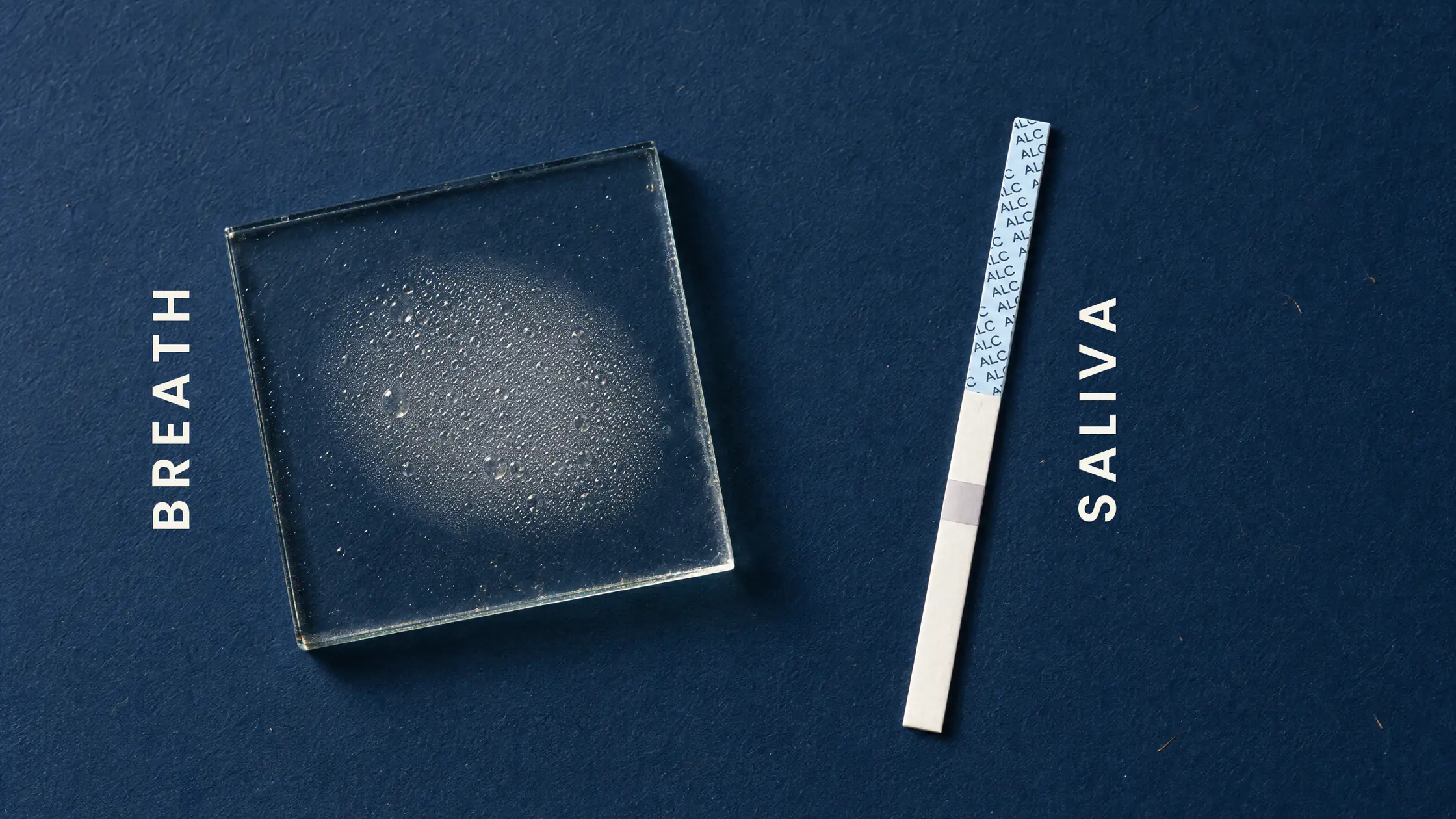
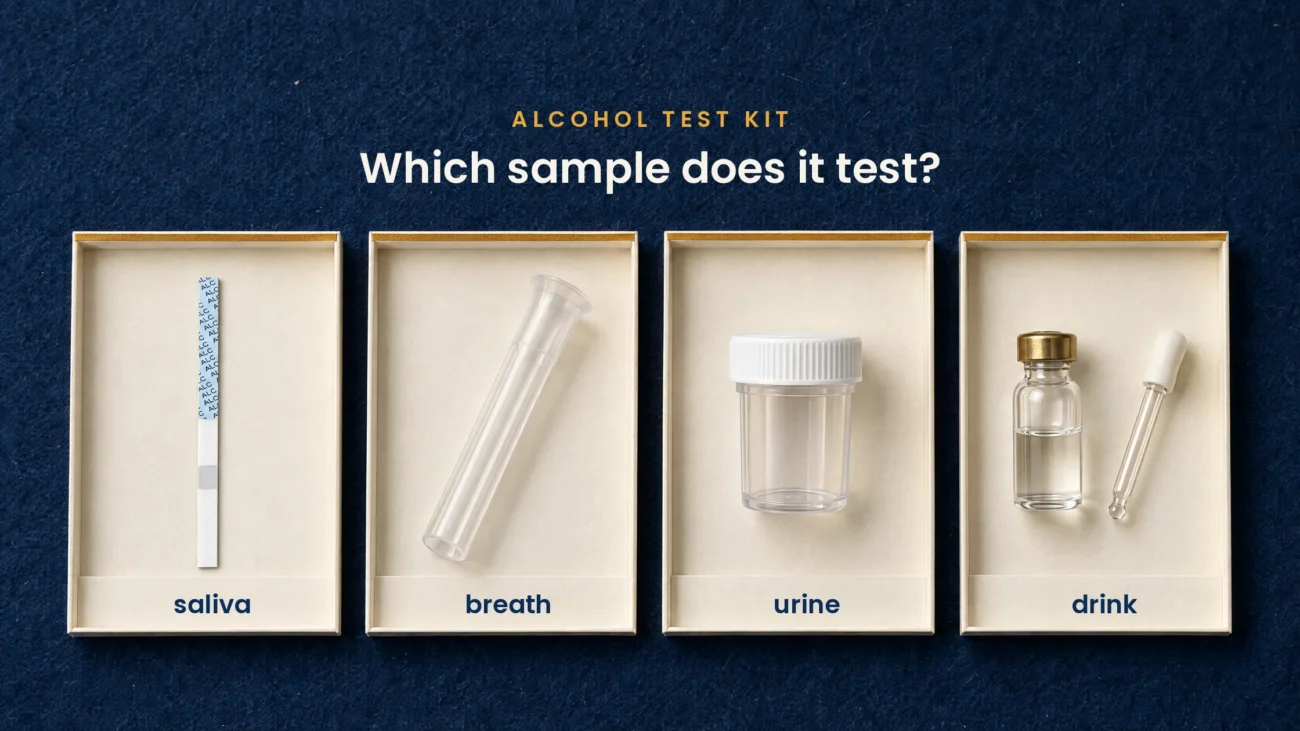
A breathalyzer gives a promille number from breath and needs a calibrated device. A saliva test strip shows by colour whether alcohol above a threshold is present in saliva, with no device. Both are personal checks; only the police test is official.
Saliva test strips such as AlkoSafe detect alcohol in saliva with an enzyme reaction instead of measuring breath. Ethanol passes from the blood into saliva freely. In a study of 48 men, saliva alcohol was on average 1.08 times the blood value and followed it closely (Jones 1979, PMID 761427). This describes saliva itself, not the accuracy of any test strip. How the strip turns alcohol into a colour is explained on how AlkoSafe works.
| Breathalyzer (alkolmetre) | Saliva test strip (e.g. AlkoSafe) | |
|---|---|---|
| Sample | Deep lung air | Saliva |
| Method | Semiconductor, fuel cell or infrared sensor | Enzyme reaction with colour change |
| Result | Number in ‰, converted from breath | Colour against a reference guide, no exact number |
| Stated threshold | Depends on the device | 0.20‰ detection threshold (how AlkoSafe works) |
| Device, battery, calibration | Needed | None, single use |
| Wait before testing | At least 15 minutes after eating or drinking | At least 15 minutes after eating, drinking, smoking or chewing gum (AlkoSafe instructions) |
| Legal standing | Personal devices: none. Only the police test counts | None, personal screening only |
Which is better depends on what you need. If you want a number and test often, a breathalyzer that is calibrated on schedule makes sense. If you want an occasional check without buying and maintaining a device, a single-use saliva strip is simpler. Neither replaces the police test, and neither tells you that you are fit to drive. Our guide how to check for alcohol before driving compares the personal methods in more detail.
To estimate roughly how much alcohol a number of drinks can produce and how that changes over time, use our blood alcohol calculator. It is an estimate from averages, not a measurement.

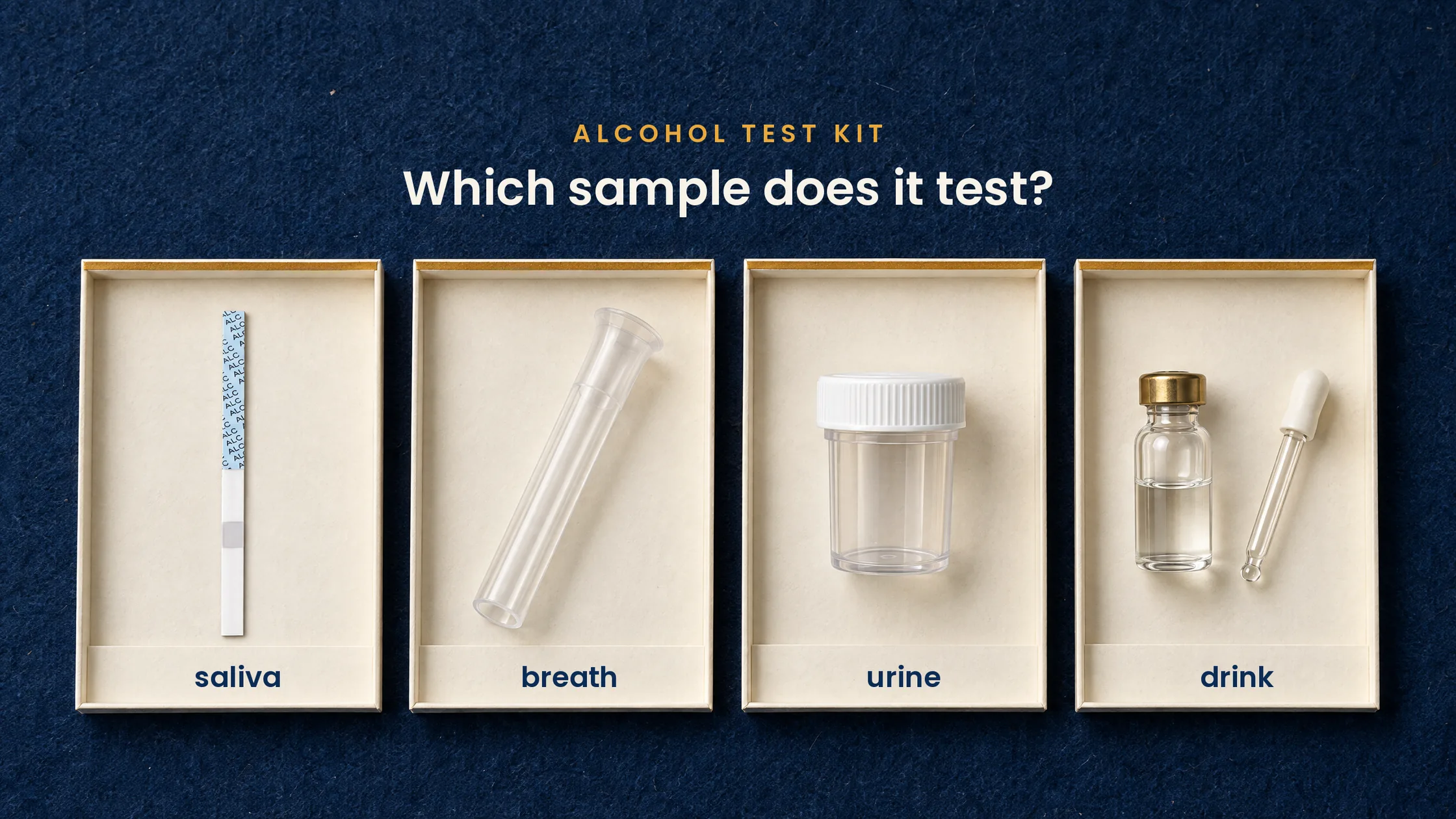
For a personal check without buying a device: the AlkoSafe saliva alcohol test. Its stated detection threshold is 0.20‰.
- 5 test strips$12.76 $2.55 per stripAdd to cart
- 10 test strips$21.56 $2.16 per stripAdd to cart
- 20 test strips$34.10 $1.71 per stripAdd to cart
Personal saliva screening does not replace an official alcohol test. A negative result does not show that driving is safe.
What no test can tell you
A negative result from a personal breathalyzer or a saliva strip does not prove that you are fit to drive or below the legal limit. Readings vary with the device, the sample and your body, and the police test decides. If you have been drinking, feel tired or impaired, or are unsure, do not drive.
Summary
A breathalyzer estimates blood alcohol from deep lung air and a fixed conversion ratio. Its result depends on the sensor, on calibration and on waiting at least 15 minutes after eating or drinking. Coffee, water and mints do not lower blood alcohol; only time does. A saliva strip is a device-free alternative for a personal check, and neither method replaces the police test.
Frequently asked questions
What does a breathalyzer measure?
It measures alcohol in the deep lung air you breathe out and converts that value into blood alcohol in promille using a fixed ratio. The Turkish limits are stated in blood promille: 0.50‰ for private cars, 0.20‰ for other vehicles, and 0.20‰ in any vehicle for novice drivers in their first two licensed years.
Are cheap breathalyzers accurate?
If a device uses a semiconductor sensor, its measuring principle is not selective for ethanol by itself. Without calibration within the manufacturer’s interval, readings can drift. Treat a personal device’s result as an estimate.
Does drinking water lower a breathalyzer reading?
It does not lower the alcohol in your blood. Coffee or a nap do not speed up how your body removes alcohol either. Only time lowers blood alcohol.
How long should I wait after a drink before using a breathalyzer?
At least 15 minutes without eating, drinking or mouthwash. Otherwise alcohol still in your mouth pushes the reading up.
Can a breathalyzer detect methanol?
In a 1989 test of one device of each sensor type, none could tell methanol from ethanol, and fuel-cell detectors also react to methanol. A breathalyzer is not a methanol test. If you suspect methanol poisoning, call 112 immediately.
Is a saliva test a replacement for a breathalyzer?
It is a different personal screening method. It shows whether alcohol above a threshold is present in saliva, without a device. Neither a saliva test nor a personal breathalyzer replaces the official police test.
About this guide
This guide was written from the sources listed below: peer-reviewed studies found in PubMed, the Turkish Traffic Department’s official page and a manufacturer’s product information, checked on 29 and 30 September 2026. Legal limits follow our separately sourced guide to Turkish drink-driving law.
Disclaimer
AlkoSafe is a personal saliva screening test. It does not replace an official breathalyzer or blood test, medical advice, employer procedures or traffic law. A result does not show that you are fit to drive.
Sources
Official
- Turkish Traffic Department (EGM), Alkollü Araç Kullanımı: trafik.gov.tr/alkollu-arac-kullanimi
Studies
- Jones AW. Observations on the specificity of breath-alcohol analyzers used for clinical and medicolegal purposes. J Forensic Sci. 1989. PMID 2760587
- Jones AW. Medicolegal alcohol determination: blood- or breath-alcohol concentration? Forensic Sci Rev. 2000. PMID 26256024
- Jones AW. Breath-alcohol analysis as a surrogate for blood-alcohol concentration depends on assuming a constant blood/breath ratio of alcohol. Forensic Sci Rev. 2025. PMID 40750099
- Logan BK, Distefano S. Ethanol content of various foods and soft drinks and their potential for interference with a breath-alcohol test. J Anal Toxicol. 1998. PMID 9602932
- Logan BK, Gullberg RG. Lack of effect of tongue piercing on an evidential breath alcohol test. J Forensic Sci. 1998. PMID 9456556
- DeChano WD. The effects of dosed tobacco in evidentiary breath testing using non-drinking subjects. Sci Justice. 2012. PMID 22841137
- Jones AW. Evidence-based survey of the elimination rates of ethanol from blood with applications in forensic casework. Forensic Sci Int. 2010. PMID 20304569
- Jones AW. Distribution of ethanol between saliva and blood in man. Clin Exp Pharmacol Physiol. 1979. PMID 761427
- Bell CM. Attaining specificity in the measurement of ethanol in breath. Acta Med Leg Soc (Liege). 1990. PMID 2135842
- Jones AW, Rössner S. False-positive breath-alcohol test after a ketogenic diet. Int J Obes (Lond). 2007. PMID 16894360
- Jones AW. Origin of the first handheld breath alcohol analyzer incorporating an electrochemical sensor. Forensic Sci Rev. 2024. PMID 38297425
- Si R, Ou R, Yang J, Chen S, Jiang H, Guo X, Zhang S. Highly selective ethanol MEMS sensor and U-disk detector based on solid phase extraction for breath alcohol detection. ACS Sens. 2025. PMID 40743108
Manufacturer
- Dräger, breathalyzer product range (calibration intervals), captured 29.09.2026: draeger.com breathalyzer range
Written by Kazim Altınok, founder of CROM TEST and AlkoSafe. Last updated: .
AlkoSafe saliva alcohol test
For a personal check without buying a device: the AlkoSafe saliva alcohol test. Its stated detection threshold is 0.20‰.
- 5 test strips$12.76 $2.55 per stripAdd to cart
- 10 test strips$21.56 $2.16 per stripAdd to cart
- 20 test strips$34.10 $1.71 per stripAdd to cart
Personal saliva screening does not replace an official alcohol test. A negative result does not show that driving is safe.

