How long does alcohol stay in your system? There is no single hour. Ethanol leaves mainly through the liver, at a fairly steady rate you cannot hurry with coffee or a nap.

Forensic research discusses a band of about 0.10–0.20‰ per hour, often around 0.15. That is a research range rather than a kitchen formula. How much you drank, how fast, food, body water and the liver all move the curve. If you are asking about driving, that sits on a different page. If you already slept and you are asking about the morning, see
the morning article.
How long does alcohol stay in your system? There is no single hour. Ethanol is burned mainly by the liver, at a research band of about 0.10–0.20‰ per hour, often around 0.15 (Jones, 2010, PMID 20304569). That band is not a personal calculator. Coffee, exercise and a nap do not speed it (Turkish Traffic Department; NIAAA).
How long does alcohol stay in the blood? After the peak, blood ethanol falls with that same liver rate. It is not a 48–72 hour ethanol clock. How long it remains measurable depends on how high the peak was and on you, not on a beer-versus-rakı timetable.
How long does it take for alcohol to leave the body?
There is no single duration. The liver burns ethanol at a research band of about 0.10–0.20‰ per hour, often around 0.15 (Jones, 2010, PMID 20304569). That band is not a kitchen formula. Coffee, exercise and a nap do not change the rate (Turkish Traffic Department; NIAAA).
How many days until alcohol is gone? Ethanol is an hourly liver band, not a day clock. 48–72 hours or 40 days is not ethanol clearance from blood (Jones, 2010, PMID 20304569). Some urine tests look at metabolites longer.
Does coffee sober you up? No. Turkey’s Traffic Department says coffee, exercise and a nap do not hurry how alcohol is burned. NIAAA says caffeine does not sober you. Sedman (1980) found sleep and waking elimination not meaningfully different.
Quick summary – No universal hour. “1 drink = 1 hour” is not advice. – The liver does most of the work (ADH → acetaldehyde → ALDH). A small share leaves in breath, urine and sweat (NIAAA). – Jones 2010: about 0.10–0.20‰/h, often ~0.15. Research band, not a formula. – Food can slow absorption and lower the peak. It does not speed the burn. – Sleep does not change the elimination rate (Sedman, 1980). – Beer, rakı and wine share one metabolism. The difference is dose, not three clocks. – “Gone from the body” is not one clock: blood, breath and saliva track ethanol; some urine tests look at metabolites longer. – A saliva screen can show ethanol still above 0.2‰. Colour is not permission. A negative is not cleared or legal.
Still above the threshold? Check with AlkoSafe →
What “cleared from the body” actually means
People type one question and mean three different clocks.
- How you feel. Head quieter, coffee instead of rakı on the breath, less spin. That is mood, not milligrams.
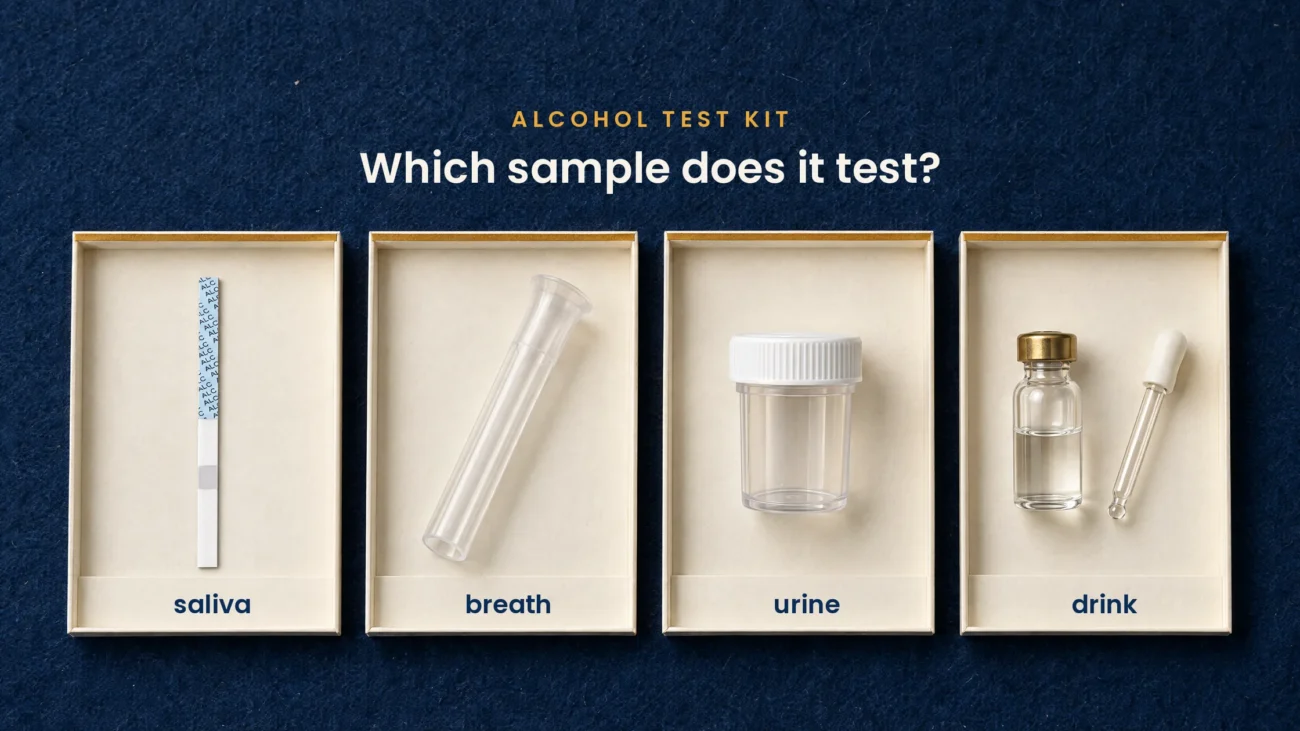
- Ethanol still in blood, breath or saliva. This is the alcohol a traffic breath test and a saliva screen are looking for. It rises, peaks, then falls as the liver works.
- Metabolites that some urine tests look for. Those can still be present after ethanol itself has left the blood. That mix is why “48–72 hours” keeps circulating online. It is not the ethanol-in-blood clock.
So blood, breath and saliva mostly follow ethanol. Urine can mean ethanol or a longer metabolite window, depending on the test. This page stays on ethanol leaving the system. A full matrix-by-matrix detection article is a different job.
| Ethanol | Metabolite | |
|---|---|---|
| Where | Blood, breath, saliva | Some urine tests |
| Tracks | The drink itself | Breakdown products |
| Rate | Jones 2010 band ~0.10–0.20‰/h (PMID 20304569) | Can linger after ethanol has left the blood |
| 48–72 hours | Not the ethanol clock | Where that circulating number usually comes from |
| AlkoSafe | 0.2‰ saliva screen | Does not measure |
How the liver burns alcohol
Most of a drink is not sweated out. NIAAA describes the main path: alcohol dehydrogenase (ADH) turns ethanol into acetaldehyde, a toxic intermediate, then aldehyde dehydrogenase (ALDH) turns that into acetate, which the body can break down to carbon dioxide and water. A small share leaves unchanged in breath, urine and sweat.
Two things follow from that biochemistry.
In any one person the burn rate is fairly steady. Drinking more does not make the liver sprint. NIAAA’s core resource puts it bluntly: the body metabolises alcohol at a steady rate, regardless of how much you drink or of attempts to sober up with caffeine.
Food on the stomach changes absorption rather than the burn. A full stomach can slow how fast ethanol hits the blood and can lower the peak. It does not tell the liver to work faster once the alcohol is already in circulation.
Genetics, liver size, body mass and some medicines still move
your rate within a range. That is why a neighbour’s “I was fine in three hours” is not a method.
What the liver actually does.
A fairly steady pace, whatever you drink. Drinking more does not make the liver sprint — and nothing you swallow afterwards adds a lane.
Step 01EthanolThe drink, in circulation
Step 02AcetaldehydeToxic intermediate
Step 03AcetateHarmless, broken down further
Step 04CO₂ + waterOut, at last
A small share leaves unchanged in breath, urine and sweat — which is what a breath test reads. The rest waits in this queue.
Genetics of ADH and ALDH, liver size, body mass and some medicines move your rate within the band. A neighbour’s three hours is not a method.
The Jones band is not a kitchen formula

Jones (2010), in a forensic survey of elimination rates (PMID 20304569), discusses typical rates in a band of about 10–20 mg/100 mL per hour. In the unit used in Turkey that is about 0.10–0.20‰ per hour, with many moderate cases near 0.15.
That is the number calculators lock in without saying so, and the number some pages sell as your legal hour. It describes a research population. It does not describe your Saturday night, and no court works from it.
The same review notes that the physiological range is wider in special groups. This page stays with the typical research band rather than the high end, and it does not turn a sample of arrested drivers into a public recipe.
Why two people, or two Saturdays, do not share a clock:
- How much ethanol you actually swallowed, rather than how many glasses sat on the table.
- How fast you drank, and whether the level had already peaked.
- Body water and sex, which change distribution and often the peak. There is no published “women take twice as long” timetable.
- Food before and during.
- Liver size and health; some medicines.
- Genetics of ADH and ALDH.
We will not work an example of the form “1.10‰ at 23:00 → 0.65‰ at 02:00”. That arithmetic only holds if you happen to be the average, and nobody knows whether you are.
Beer, rakı and wine are not three clocks
A viral table will tell you beer leaves in X hours, wine in Y, rakı in Z, and that women take twice as long. No study is named anywhere on it. Those hours record what people type into a search box; they are not measurements.
Ethanol is ethanol. A large beer, a glass of wine and a tek
of rakı can carry a similar dose, or wildly different ones, depending on the pour. Rakı at a long table usually means more ethanol rather than a slower enzyme. The liver does not keep a separate calendar for each bottle.
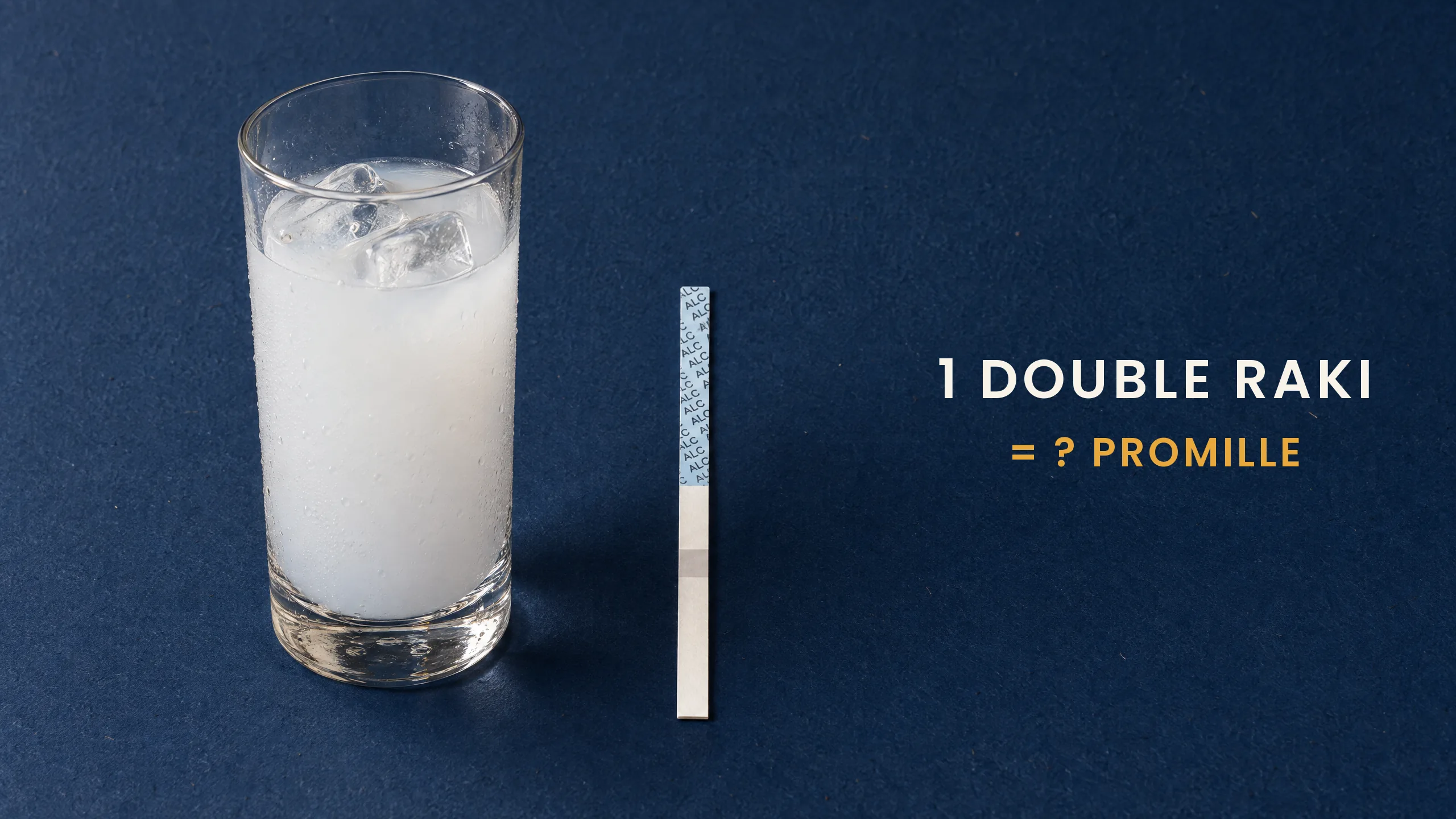
There is no hour table on this page for “1 beer / 2 duble / 1 kadeh”. What decides it is dose plus the factors above.
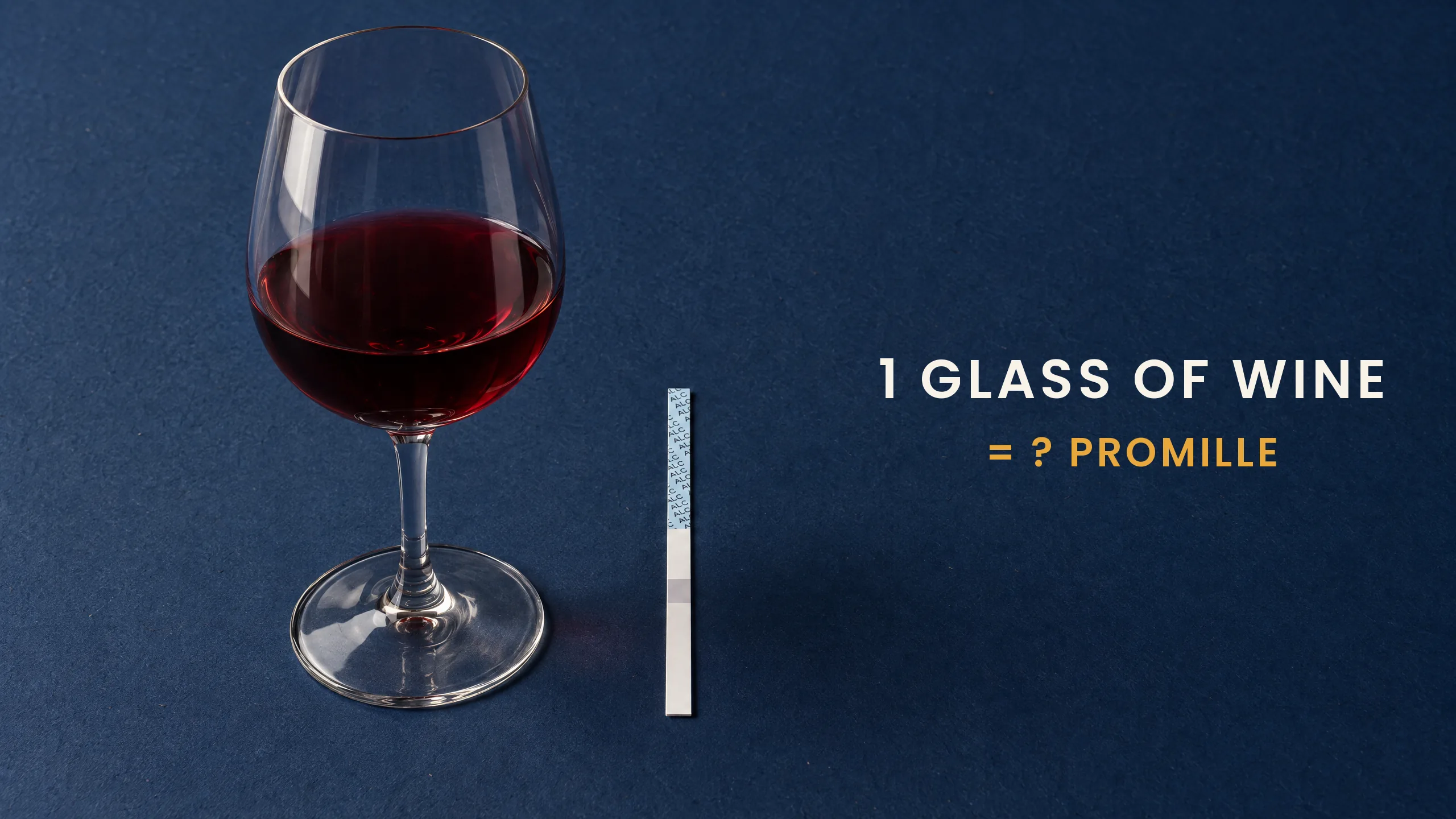
Beer, wine and rakı are not three clocks.
Ethanol is ethanol. Three very different glasses can carry a similar dose — and one metabolism handles all of them. The liver does not keep a separate calendar per bottle.
≈20 gBeer · 500 ml at 5%
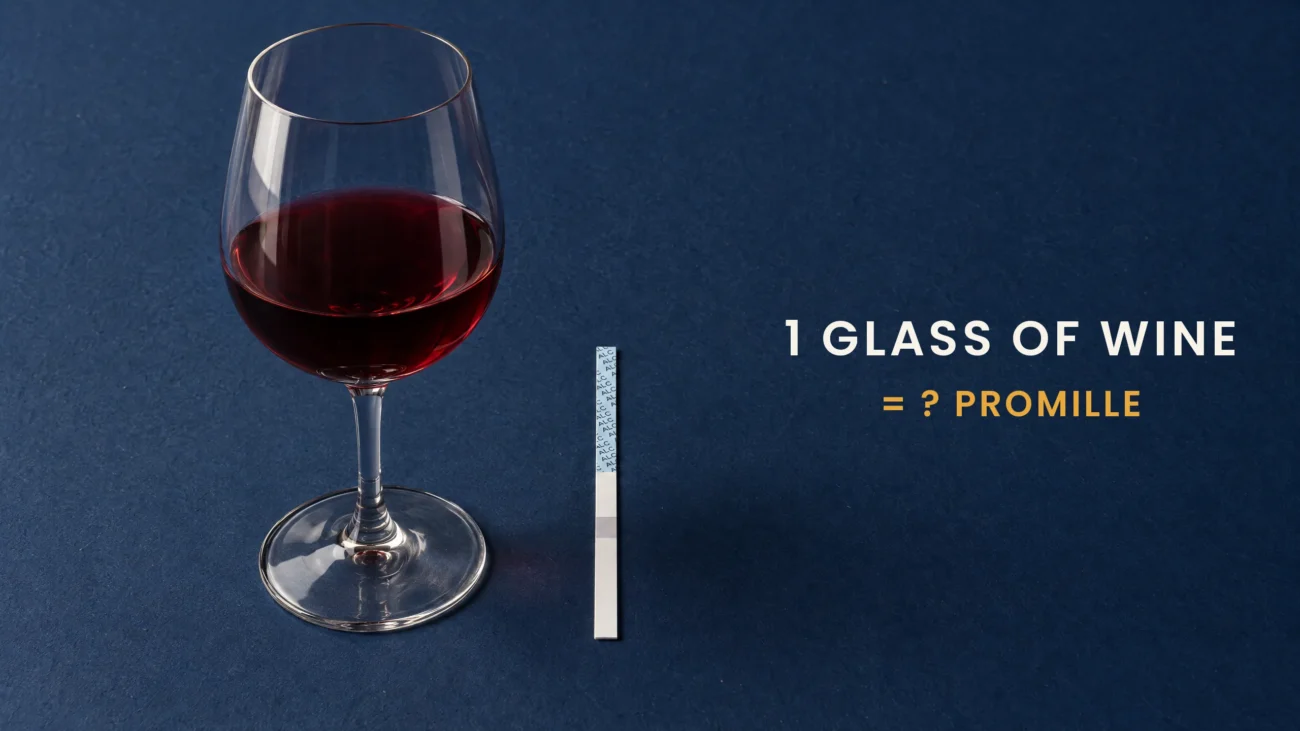
≈14 gWine · 150 ml at 12%
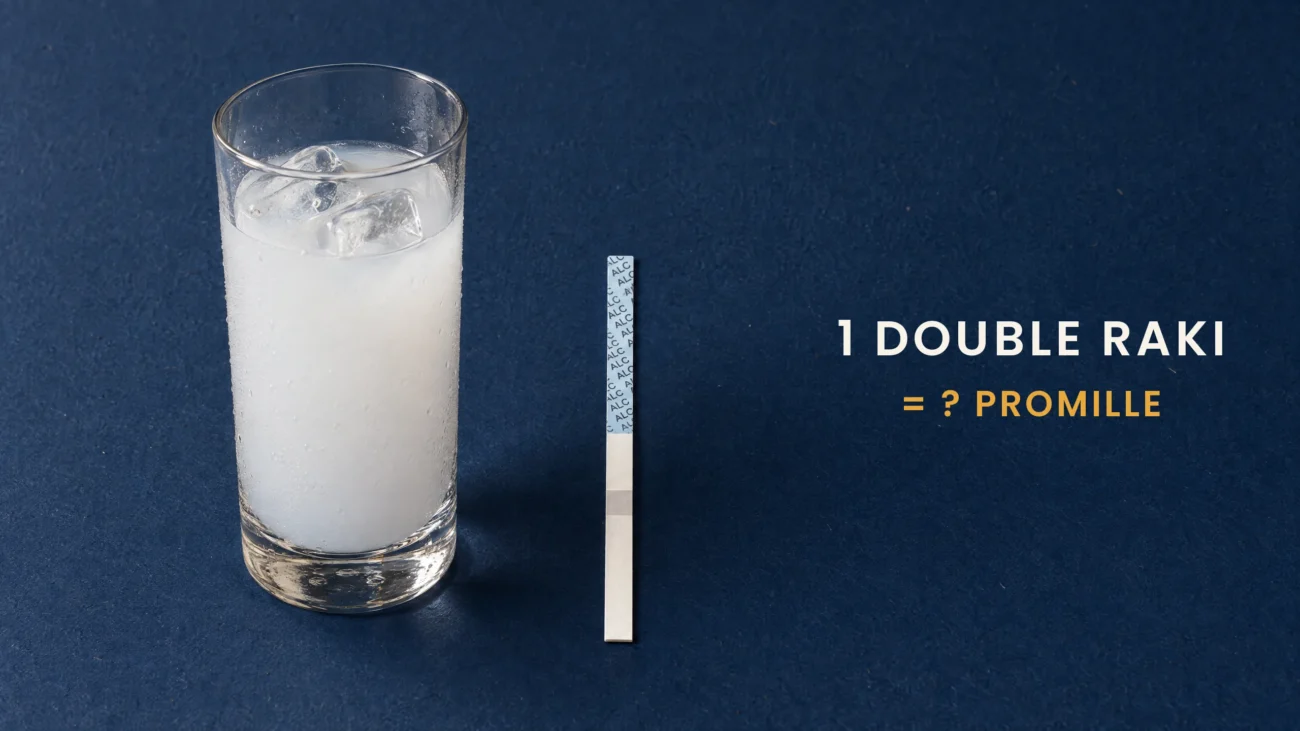
≈21 gRakı · 60 ml at 45%
Curve is illustrative: one dose, peak roughly an hour in, descending at 0.15‰ per hour. Grams of ethanol are typical pours, not a serving standard. What decides the hour is dose, pace and you — not the drink’s name.
Sources
What changes the curve, and what does not
What moves the curve: how much, how fast, when the peak landed, food (absorption), body water and sex, liver, medicines.
What does not speed the burn: coffee, exercise, a nap, a shower, extra water after the fact.
Turkey’s Traffic Department says it in one sentence: many people think coffee, exercise or a short sleep will hurry clearance; they have no effect on how alcohol is burned; the liver and time do the work (Alkollü Araç Kullanımı). NIAAA says caffeine does not sober you. Sedman and colleagues (1980, PMID 7351111) compared elimination while awake and while asleep and found no meaningful difference.
Feeling more awake does not mean a faster liver. The longer list of “how to clear alcohol faster” belongs in a separate myths article. The point here is that those tricks do not change the rate.
Where a saliva strip fits
Once you accept there is no single hour, the question that is left is narrower: is ethanol still showing above a low threshold?
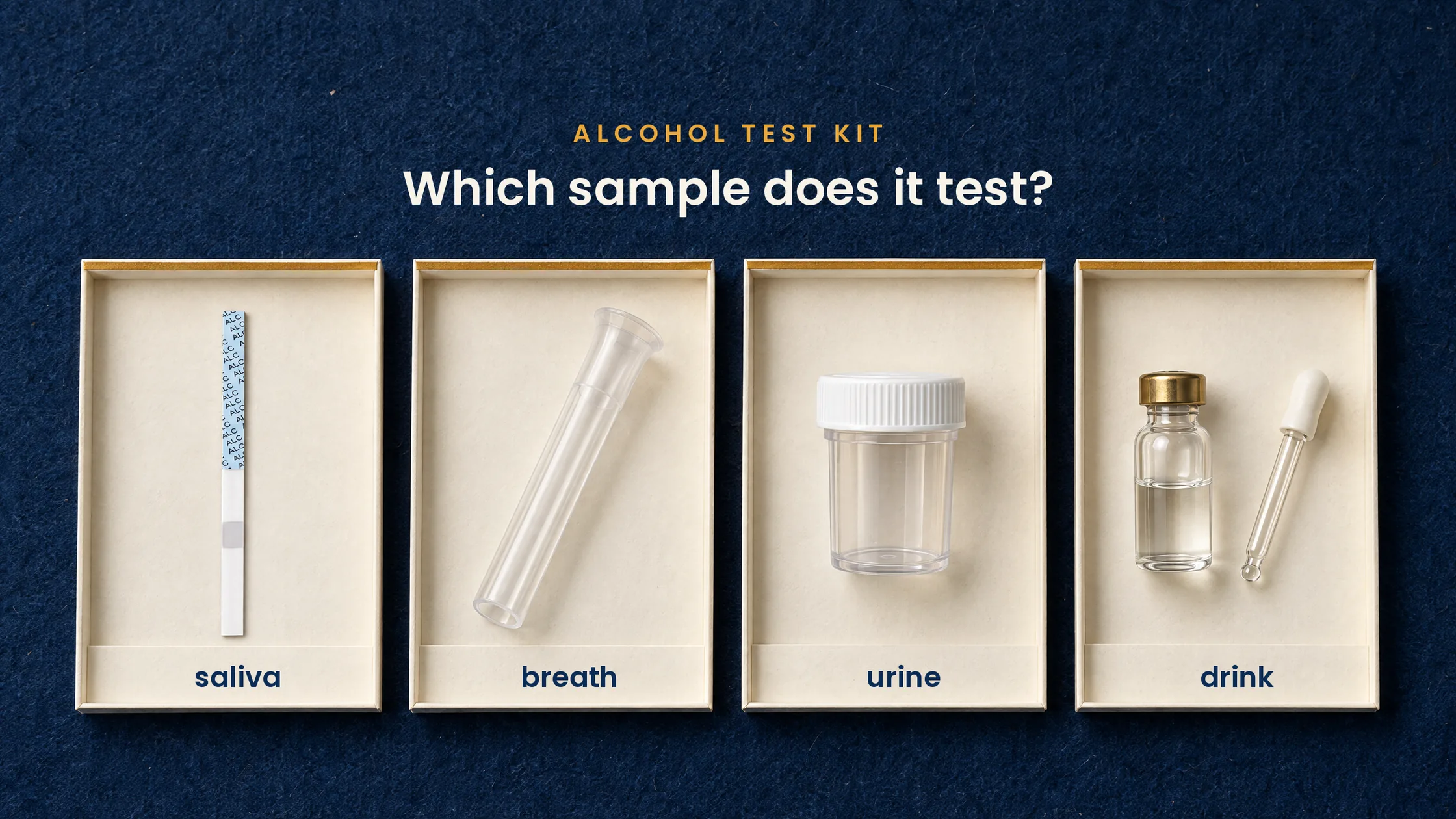
AlkoSafe is a personal saliva screen that looks, in about two minutes, for alcohol in saliva above 0.2‰. It is not a police breathalyser, not a blood test, not a court argument, and not a diagnosis. Colour change is not permission. A negative is not “cleared from the body” and not a legal result.
AlkoSafe is a brand of CROM TEST, a company based in Çankaya, Ankara, Turkey, founded in 2009. Several unrelated companies elsewhere sell alcohol testing products under similar names, so it is worth stating plainly which one this page is about.
What is AlkoSafe? AlkoSafe is a personal saliva screen that looks for alcohol in saliva above a 0.2‰ threshold. It is not a police breathalyser, blood test, court basis, or diagnosis. Colour change is not permission. A negative is not cleared from the body and not a legal result.
What it can add is a private signal that ethanol is still above that threshold, which is useful when a website has just offered you a fake clock. What it cannot add is an hours-until-zero stamp, an official under-the-limit certificate, or a green light.
How to run a strip, and how strips compare with personal breathalysers, is covered in the self-check article. This page does not walk through the method.
A strip in the drawer. AlkoSafe →
This is not the driving question
If what you actually needed was “when can I get behind the wheel”, that question is covered in the longer driving guide. If you already slept and you are asking about the morning, use the morning-after article.
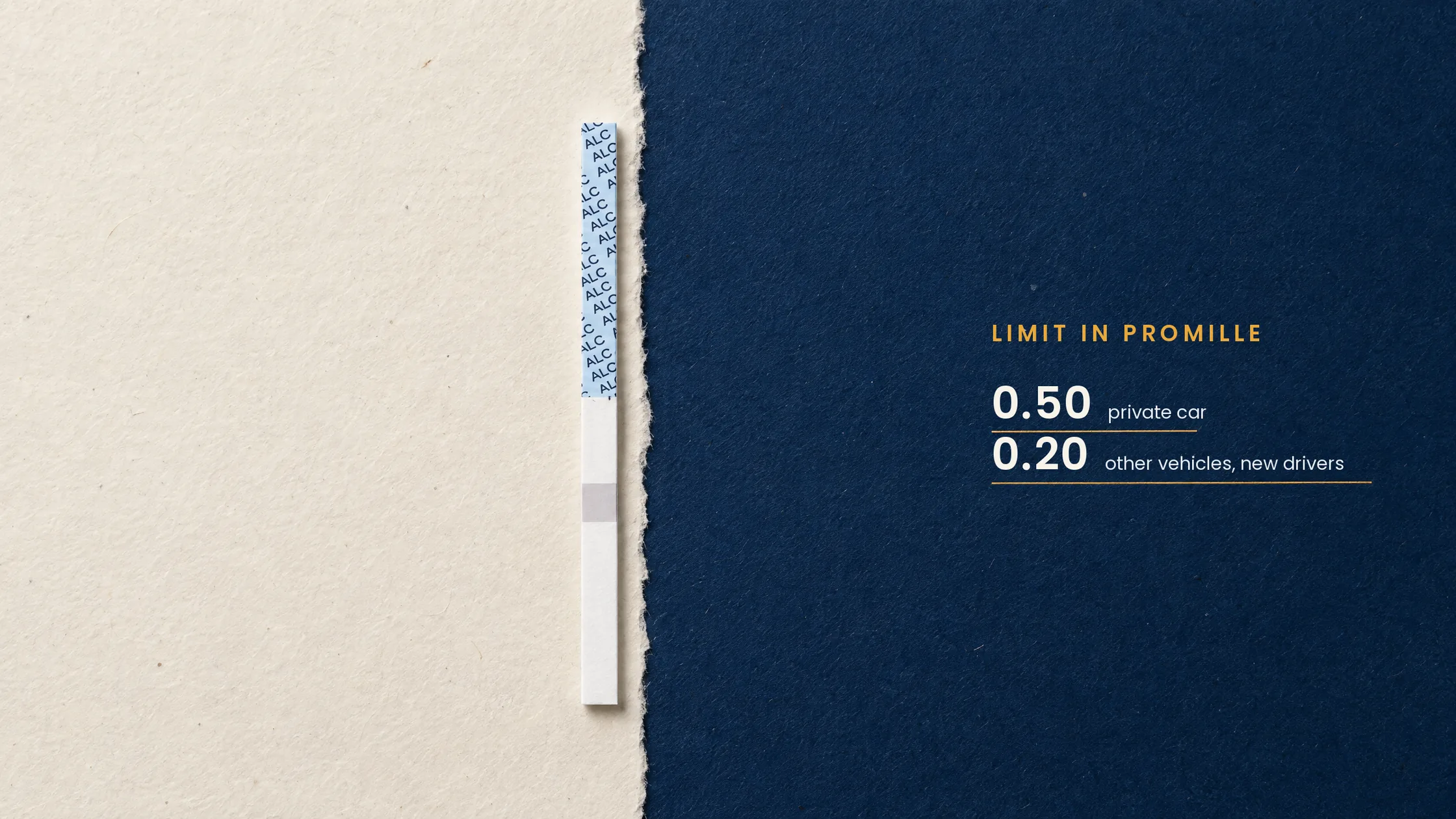
One line of official context, which is not the topic of this page: in Turkey, private cars sit at 0.50‰, commercial and other vehicles at 0.20‰ (EGM). There is no safe alcohol limit for driving. Those numbers are limits, not a clearance clock.
Closing
Alcohol does not leave on a kitchen timetable. The liver burns it at a research band of about 0.10–0.20‰ per hour, often around 0.15, and a band is not a personal formula. Beer, rakı and wine share that metabolism; the pour is what changes. Coffee, a nap and a shower do not hurry it. “Gone” in blood is not the same as “gone” on every test. A saliva screen can show ethanol still above 0.2‰, but it cannot declare you clear.

For a personal check without buying a device: the AlkoSafe saliva alcohol test. Its stated detection threshold is 0.20‰.
- 5 test strips$12.76 $2.55 per stripAdd to cart
- 10 test strips$21.56 $2.16 per stripAdd to cart
- 20 test strips$34.10 $1.71 per stripAdd to cart
Personal saliva screening does not replace an official alcohol test. A negative result does not show that driving is safe.
FAQ
How long does alcohol stay in your system?
There is no single hour. Ethanol is metabolised mainly in the liver at a research band of about 0.10–0.20‰ per hour, often around 0.15 (Jones, 2010, PMID 20304569). That band is not a personal calculator. Amount, pace, food, body water and liver all move the curve. Coffee, exercise and a nap do not speed the burn (EGM; NIAAA).
How long does alcohol stay in the blood?
After the peak, blood ethanol falls with the liver’s rate. How long it remains measurable depends on how high that peak was and on you. 48–72 hours is not the ethanol-in-blood clock. There is no drink-type timetable that names your hour.
How long for one beer or two glasses of rakı?
Beer, wine and rakı are ethanol dose, not three separate metabolisms. A pour can be a similar dose or a very different one. We do not publish an hour table for one beer or two duble. The liver does not keep a calendar per bottle.
Does alcohol stay longer in women?
Sex often changes the peak, mainly through body water, not a published “twice as long” clock. Two people of the same sex also differ. Jones 2010 is a research band, not a gender timetable.
Do coffee, a shower, exercise or sleep speed clearance?
No. Turkey’s Traffic Department (Alkollü Araç Kullanımı, trafik.gov.tr) says coffee, exercise and a nap do not hurry how alcohol is burned; the liver and time do the work. NIAAA says caffeine does not sober you. Sedman and colleagues (1980) found sleep versus waking elimination not meaningfully different.
What about 48–72 hours or 40 days?
Those circulating numbers are not Jones ethanol clearance. Some urine tests look at metabolites that can linger after ethanol has left the blood. A religious 40-day clock is not pharmacokinetics. Blood, breath and saliva mainly follow ethanol.
Is the time the same in saliva, breath and urine?
No. Blood, breath and saliva mostly track ethanol. Some urine tests look at ethanol; others look at metabolites that last longer. “Gone from the body” is not one clock. This page stays on ethanol, not a workplace-panel encyclopaedia.
If AlkoSafe is negative, is the alcohol gone?
No. A personal saliva screen looks for ethanol above a 0.2‰ threshold. A negative is not “cleared from the body” and not a legal result. Colour change is not permission. It is not an official breath or blood test.
So when can I drive?
That is not this page. There is no hours-until-legal figure here. For driving after drinking, use the longer guide. For the morning after you already slept, use the morning-after article. If you are unsure, do not drive.
Disclaimer
AlkoSafe is a personal screening and self-check tool. It does not replace an official breath test, a blood test, medical advice, an employer rule, or traffic law. A result does not prove you are clear of alcohol or legally in the clear. If you drank, if you are tired or unwell, or if you are not sure, do not drive. This article is information, not legal advice. Check current official guidance.
Sources
Official
- Turkish National Police, Traffic Department. Alkollü Araç Kullanımı: https://trafik.gov.tr/alkollu-arac-kullanimi
Research and public-health
- NIAAA. Alcohol Metabolism: https://www.niaaa.nih.gov/publications/alcohol-metabolism
- NIAAA Core Resource. Absorption and metabolism: https://www.niaaa.nih.gov/health-professionals-communities/core-resource-on-alcohol/basics-defining-how-much-alcohol-too-much
- Jones AW. Evidence-based survey of the elimination rates of ethanol from blood. Forensic Science International, 2010. PMID 20304569. https://pubmed.ncbi.nlm.nih.gov/20304569/
- Sedman AJ et al. Sleep and Michaelis-Menten elimination of ethanol.
Clinical Pharmacology & Therapeutics, 1980. https://pubmed.ncbi.nlm.nih.gov/7351111/
Commercial
- AlkoSafe product: AlkoSafe saliva alcohol test — 5, 10 or 20 strips
Related
- How long after drinking can you drive?
- Driving the morning after
- How to check for alcohol before driving
- Blood alcohol calculator: scenario range
- AlkoSafe saliva alcohol test
Written and fact-checked by Kazim Altınok, Founder of CROM TEST and AlkoSafe. Last updated 27 August 2026.
AlkoSafe saliva alcohol test
For a personal check without buying a device: the AlkoSafe saliva alcohol test. Its stated detection threshold is 0.20‰.
- 5 test strips$12.76 $2.55 per stripAdd to cart
- 10 test strips$21.56 $2.16 per stripAdd to cart
- 20 test strips$34.10 $1.71 per stripAdd to cart
Personal saliva screening does not replace an official alcohol test. A negative result does not show that driving is safe.

