Driving the morning after drinking has no morning hour that makes last night’s drinks disappear. Sleep can rest you. It does not speed the liver.

If the session ran late, or you lost count, alcohol can still be in your blood when you pick up the keys for work. Even when the level has fallen, hangover itself — headache, fatigue, slower attention — can still blunt driving. Feeling better is not the same as alcohol gone.
How many hours after drinking is it okay to drive the next morning? There is no reliable morning hour. Sleep does not speed clearance. Leftover alcohol is still possible after a late night; hangover can impair driving even when little alcohol remains. We do not give an hours-until-legal figure. If you are unsure, do not drive.
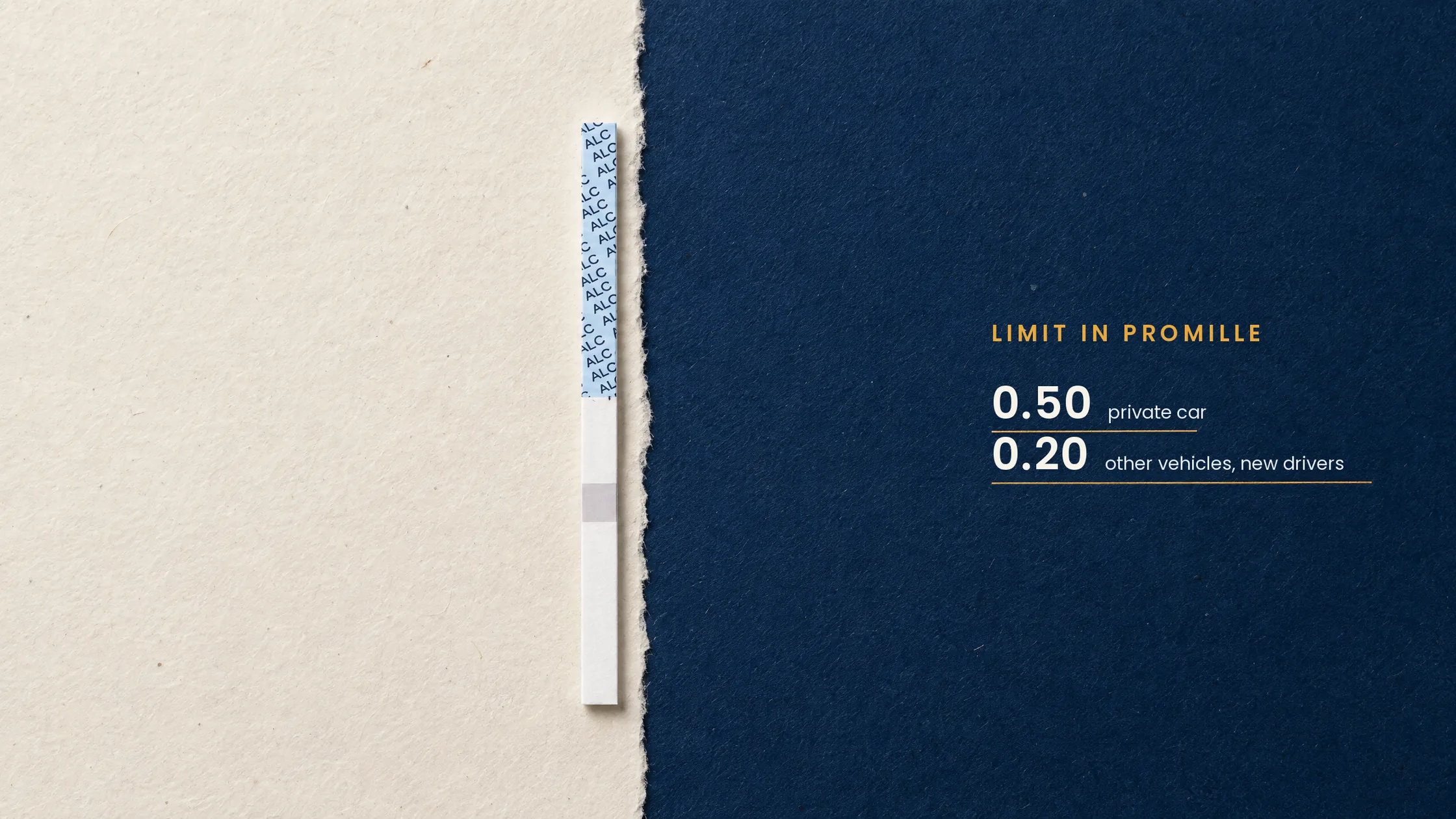
Can I drive the morning after I drank? If you drank last night, the morning is not automatically clear. Sleep does not reset the limit. Private cars in Turkey: 0.50 promil. Commercial and other vehicles: 0.20 promil (Turkish Traffic Department, trafik.gov.tr). Feeling fine is not a measurement.
Quick summary
- “I slept, so I must be fine” is the usual morning mistake.
- Two separate risks: leftover alcohol, and hangover impairment even when little or no alcohol remains.
- Coffee, a shower, breakfast or a nap do not burn alcohol faster. Turkey’s traffic authority says the same.
- Private cars in Turkey: 0.50 promil. Commercial and other vehicles: 0.20 promil (EGM).
- First-offense administrative fine under KTK 48/5 is 25,000 TL after Law 7574 (Official Gazette, 27 Feb 2026). Licence hold still 6 months on a first catch.
- A saliva strip is a personal screen. Colour change is not permission. A negative is not clearance.
- If you drank last night and you are unsure this morning, do not drive.

Check yourself before you leave — AlkoSafe →
The trap: “I slept, so I must be fine”
Most people are not asking about the ride home from the meyhane. They are asking about 07:30 — the commute, the airport run, the morning shift. They slept. The headache is quieter. The mouth tastes of coffee, not rakı. The brain files that as “over”.
It is not a clock. Alcohol leaves mainly through the liver, at a pace that barely changes whether you are asleep or staring at the ceiling. Sedman and colleagues (1980) compared elimination while awake and while asleep and found no meaningful difference. Turkey’s Traffic Department (Alkollü Araç Kullanımı, trafik.gov.tr) puts the folk remedies in one sentence: coffee, exercise and a short sleep do not speed clearance. The liver and time do the work.
Does sleep remove alcohol? No. Sleep and waking clear alcohol at about the same rate (Sedman, 1980). Feeling better is usually time passing. Coffee, a shower or a nap do not change the pace (EGM; NIAAA).
So the morning question is not “how many hours after the last glass”. That wider question belongs in the longer guide. The morning question is narrower: you already slept. Can leftover alcohol still be there — and can hangover still get in the way even if it is not?
Two different morning risks
They get mashed together online. They are not the same thing.
Residual alcohol next morning The morning after has two separate risks: leftover alcohol, and hangover even when little or no alcohol remains. A strip only speaks to alcohol above its threshold. It does not measure hangover.
| Leftover alcohol | Hangover | |
|---|---|---|
| What it is | Last night’s drinks may still be measurable at breakfast | Headache, fatigue, shorter attention — even when alcohol is low |
| Legal line | 0.50 / 0.20 promil (EGM, trafik.gov.tr) | No legal hangover line; a separate driving load |
| Strip | May change colour if alcohol is above the threshold | Does not measure it |
| Source | EGM; Jones 2010 (elimination band) | Verster 2014; Alford 2020 |
1) Leftover alcohol
If drinking ran past midnight, if the glasses were mixed, if nobody counted, the blood level can still be measurable at breakfast. Commercial drivers sit under a lower line (0.20 promil). A private-car driver can also wake above 0.50 after a long night. You will not feel a number. Feeling “okay” does not report promil.
This is the part a saliva screen can speak to: alcohol still present above a low threshold, or not detected at that threshold. It still does not tell you that driving is a good idea.
2) Hangover, even when alcohol is low or gone
Hangover is the next-day state that can last after most of the alcohol is gone — headache, thirst, nausea, heavy eyes, a shorter fuse, divided attention. Verster and colleagues (2014), in a highway-style simulator, found worse lane control the morning after heavy drinking. The extra weaving was in the same range as a blood alcohol level that would already be illegal in many countries. Alford and colleagues (2020), in a “commute to work” drive, saw similar problems in people with residual alcohol and in people whose morning breath test was already at or near zero.
That second group matters. A strip that does not change colour does not measure fatigue, divided attention, or how you handle a pedestrian stepping off a kerb. Hangover is not “alcohol leftover, just weaker”. It is a separate drag on the same skills driving needs.
Why there is still no “X hours after the last drink”

Jones (2010), in a forensic review, discusses a range of elimination, often around 0.10–0.20 promil per hour, with many moderate cases near 0.15. That is a research band, not a kitchen formula. Body size, sex, food, liver health, medicines, how fast you drank, and when the level actually peaked all move the result. Two people can drink the same and wake in different places. The same person can, on two Saturdays.
Calculators that spit out “legal at 08:12” are guessing from an average you cannot see. We will not add another one. If you want the wider “how long after drinking” frame, use the pillar. This page stays on the morning after you already slept.
What makes a Turkish morning more awkward
The pattern is familiar: a düğün that started late, a rakı table where the bottles kept arriving, New Year, a match night, a guest who did not want to be the first to leave. Then an early start — işe, a flight, a school run, a commercial shift.
Commercial and “other” vehicles sit at 0.20 promil. Taxi, truck, minibus, company car used as a work vehicle: the morning margin is thinner. Private cars sit at 0.50. Neither number is a safety certificate. The Traffic Department is blunt: there is no safe alcohol limit; being under the line may keep a ticket away; it does not keep you safe. Effects on mood and control are already discussed from about 0.2 promil.
First catch under KTK 48/5, after Law 7574 in the Official Gazette of 27 February 2026: 25,000 TL administrative fine, and the licence still goes for six months. Repeat inside five years: 50,000 then 150,000, with two- and five-year holds. Those are penalty facts, not a reason to “aim for just under”.
Coffee, shower, breakfast, nap
They change how you feel. They do not change the liver’s pace.
- Coffee: more awake, not less alcohol.
- Hot shower: cleaner, not lower promil.
- Breakfast: easier on the stomach. The alcohol already in blood is not cancelled.
- A short extra sleep: more rest. Same clearance rate as being awake.
NIAAA describes metabolism as a steady process. Caffeine does not hurry it. EGM says the same in Turkish traffic language. The useful split is simple: feeling better is not alcohol gone.
Where a saliva screen fits — and where it stops
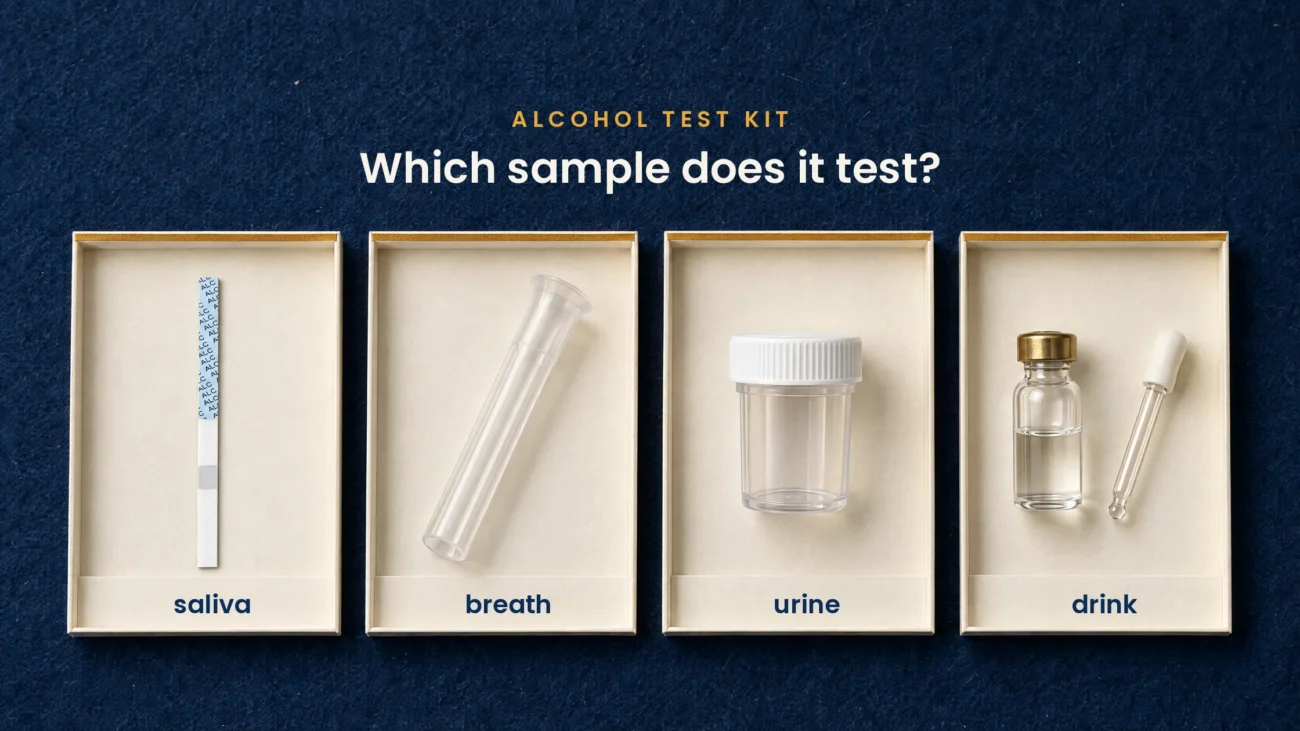
AlkoSafe is a personal saliva strip that looks, in about two minutes, for alcohol in saliva above a 0.2 promil threshold. It is not a police breathalyser, not a blood test, not a court argument, and not a diagnosis. Colour change is not permission. A negative is not clearance.
What can a morning saliva test tell you? A personal saliva screen can say whether alcohol is showing above the strip’s threshold. It does not measure hangover, fatigue, or the official 0.50 / 0.20 lines. Any blue or purple, or any muddy result — do not drive.
What it can do on a Tuesday morning:
- Give you a private signal before you pick up the keys.
- Interrupt the “I slept, I must be fine” story if the pad changes colour.
- Push the decision toward a taxi, a colleague, or staying put.
What it cannot do:
- Say you are legally under 0.50 or 0.20.
- Measure hangover impairment.
- Replace the official test at a çevirme.
- Turn a negative into permission.
How to use the method, and how strips compare with personal breathalysers and apps, is the self-check article. Here the only rule that matters: any blue or purple, or any muddy result — do not drive. Wait at least 15 minutes after food, drink or a cigarette, or mouth alcohol will lie to you.
A strip in the kitchen drawer — AlkoSafe →
How to read a morning result
- Colour change: alcohol detected. That is a stop. Not a debate about “but I feel fine”.
- No colour change: alcohol was not seen above the strip’s threshold. That is not “you can drive”. You may still be tired, dry, unfocused, or on medicines. You may have tested too early after coffee or a cigarette.
- Unsure / faint / odd: treat it as a stop.
If last night was late and you have any doubt, skip the car. The strip is a pause button, not a green light.
The decision that actually works
Alcohol hits judgement as well as reaction time. After the third glass, people get better at talking themselves into driving. The useful decision is earlier: if you will drink, you will not drive — not at midnight, not at 07:30. Sober driver, taxi, stay over, leave the car.
A strip in the drawer helps only after that plan has already failed, or when you honestly do not know what is left. It supports a more careful choice. It does not make the choice for you.
Closing
The morning after is not a free hour. Sleep is not a reset. Leftover alcohol can still be there. Hangover can still get in the way when it is not. Turkey’s public limits are 0.50 and 0.20 promil; they are not a safety promise. If you drank last night and this morning is a question mark, do not drive. A saliva screen can add one fact. It cannot give permission.

For a personal check without buying a device: the AlkoSafe saliva alcohol test. Its stated detection threshold is 0.20‰.
- 5 test strips$12.76 $2.55 per stripAdd to cart
- 10 test strips$21.56 $2.16 per stripAdd to cart
- 20 test strips$34.10 $1.71 per stripAdd to cart
Personal saliva screening does not replace an official alcohol test. A negative result does not show that driving is safe.
FAQ
Can I drive the morning after I drank?
If you drank last night, the morning is not automatically clear. There is no morning hour that works for everyone. Sleep does not speed clearance (Sedman, 1980). If the night ran late or the amount is unclear, leftover alcohol is still possible. Hangover can impair driving even when little alcohol remains (Verster, 2014; Alford, 2020). If you are unsure, do not drive.
How many hours after a hangover is it okay to drive?
There is no reliable hour count. Calculators that name a clock time are using an average, not your liver (Jones, 2010 is a research band, not a kitchen clock). We do not give an hours-until-legal figure.
Does sleep remove alcohol?
No. Sleep does not burn extra alcohol. Sedman and colleagues (1980) found no meaningful difference in elimination while awake and while asleep. You may feel better because time passed.
Do coffee or a shower help the next morning?
They can make you feel more awake. They do not speed the liver. Turkey’s Traffic Department (trafik.gov.tr) says coffee, exercise and a nap do not hurry clearance. NIAAA says caffeine does not hurry metabolism either.
I feel fine. Is there still a risk?
Yes. You do not feel a promil number. Hangover symptoms can also sit under a “I’m okay” story. Feeling fine is not a measurement.
Is the morning limit different for commercial drivers?
The limit is 0.20 promil for vehicles other than private cars, including commercial use. The morning margin is thinner. The limit is still not a safety certificate.
If a saliva test is negative, can I drive?
A negative personal screen is not permission and not an official result. A strip such as AlkoSafe only looks for alcohol above its threshold; it cannot say you are legally under 0.50 or 0.20. It does not measure hangover. If you drank last night or you are unsure, do not drive.
Can hangover impair driving even at zero alcohol?
Yes. Verster (2014) and Alford (2020) found worse control the morning after heavy drinking, including in people whose morning alcohol was already at or near zero. A strip cannot see that.
What is the safest plan?
Decide before the first drink that you will not drive — at night or the next morning. Taxi, sober driver, or stay. A personal screen is a backup look, not a substitute for that plan.
Disclaimer
AlkoSafe is a personal screening and self-check tool. It does not replace an official breath test, a blood test, medical advice, an employer rule, or traffic law. A result does not prove you are fit to drive or legally in the clear. If you drank, if you are tired or unwell, or if you are not sure — do not drive. This article is information, not legal advice. Check current official guidance.
Sources
Official
- Turkish National Police, Traffic Department — Alkollü Araç Kullanımı: https://trafik.gov.tr/alkollu-arac-kullanimi
- Official Gazette, 27 February 2026, no. 33181, Law 7574, article 12 (KTK 48/5 amounts): https://www.resmigazete.gov.tr/eskiler/2026/02/20260227-0.htm
Research and public-health
- NIAAA — Alcohol Metabolism: https://www.niaaa.nih.gov/publications/alcohol-metabolism
- NIAAA Core Resource — absorption and metabolism: https://www.niaaa.nih.gov/health-professionals-communities/core-resource-on-alcohol/basics-defining-how-much-alcohol-too-much
- Jones AW. Evidence-based survey of the elimination rates of ethanol from blood. Forensic Science International, 2010. https://pubmed.ncbi.nlm.nih.gov/20304569/
- Sedman AJ et al. Sleep and Michaelis-Menten elimination of ethanol.
Clinical Pharmacology & Therapeutics, 1980. https://pubmed.ncbi.nlm.nih.gov/7351111/ - Verster JC et al. Effects of alcohol hangover on simulated highway driving performance. Psychopharmacology, 2014. https://doi.org/10.1007/s00213-014-3474-9
- Alford C et al. The impact of alcohol hangover on simulated driving performance during a ‘commute to work’. Journal of Clinical Medicine, 2020. https://doi.org/10.3390/jcm9051435
- Gunn C et al. A systematic review of the next-day effects of heavy alcohol consumption on cognitive performance. Addiction, 2018. https://doi.org/10.1111/add.14404
Commercial
- AlkoSafe product: https://alkosafe.com/alkosafe/
Related
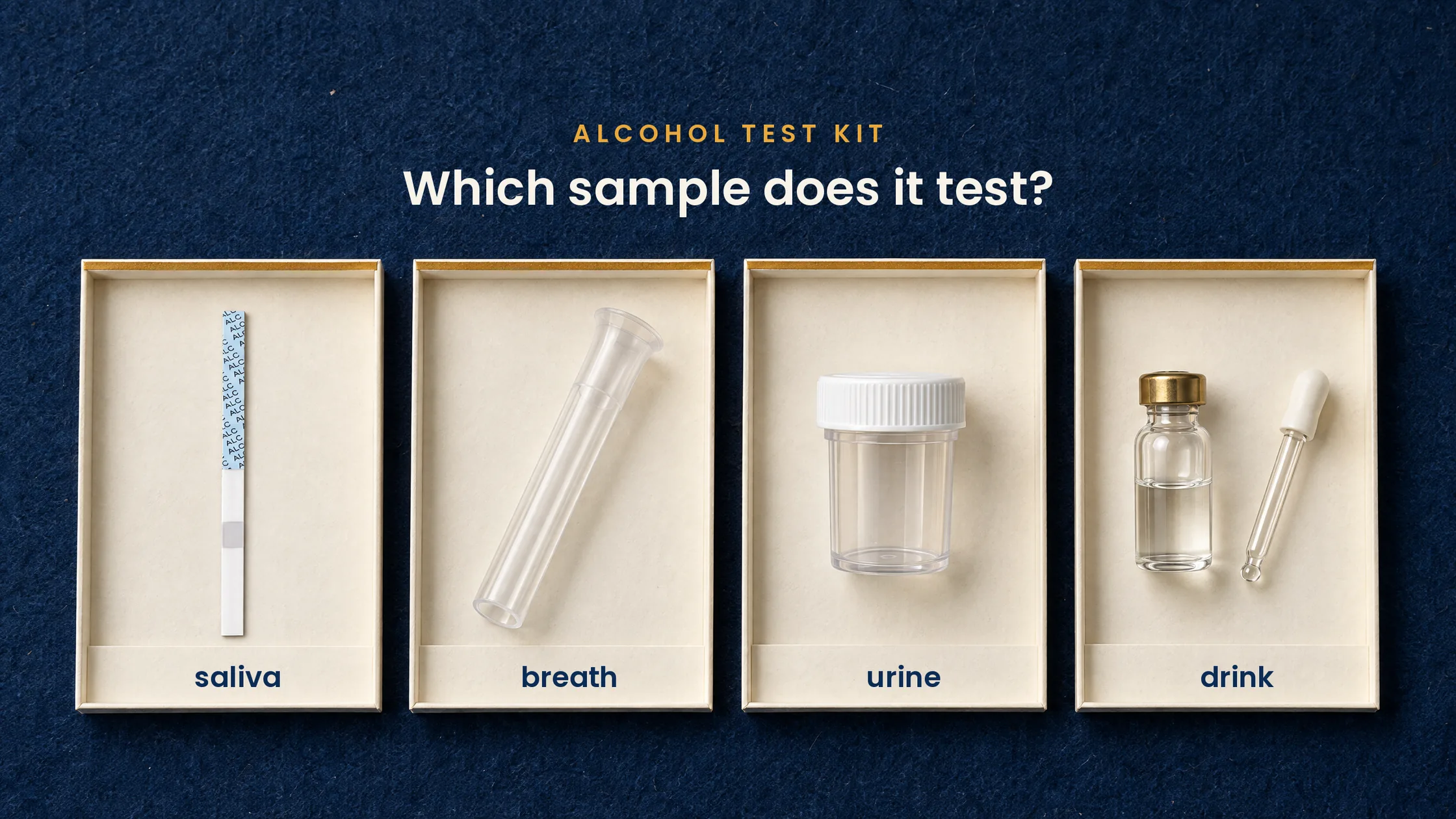
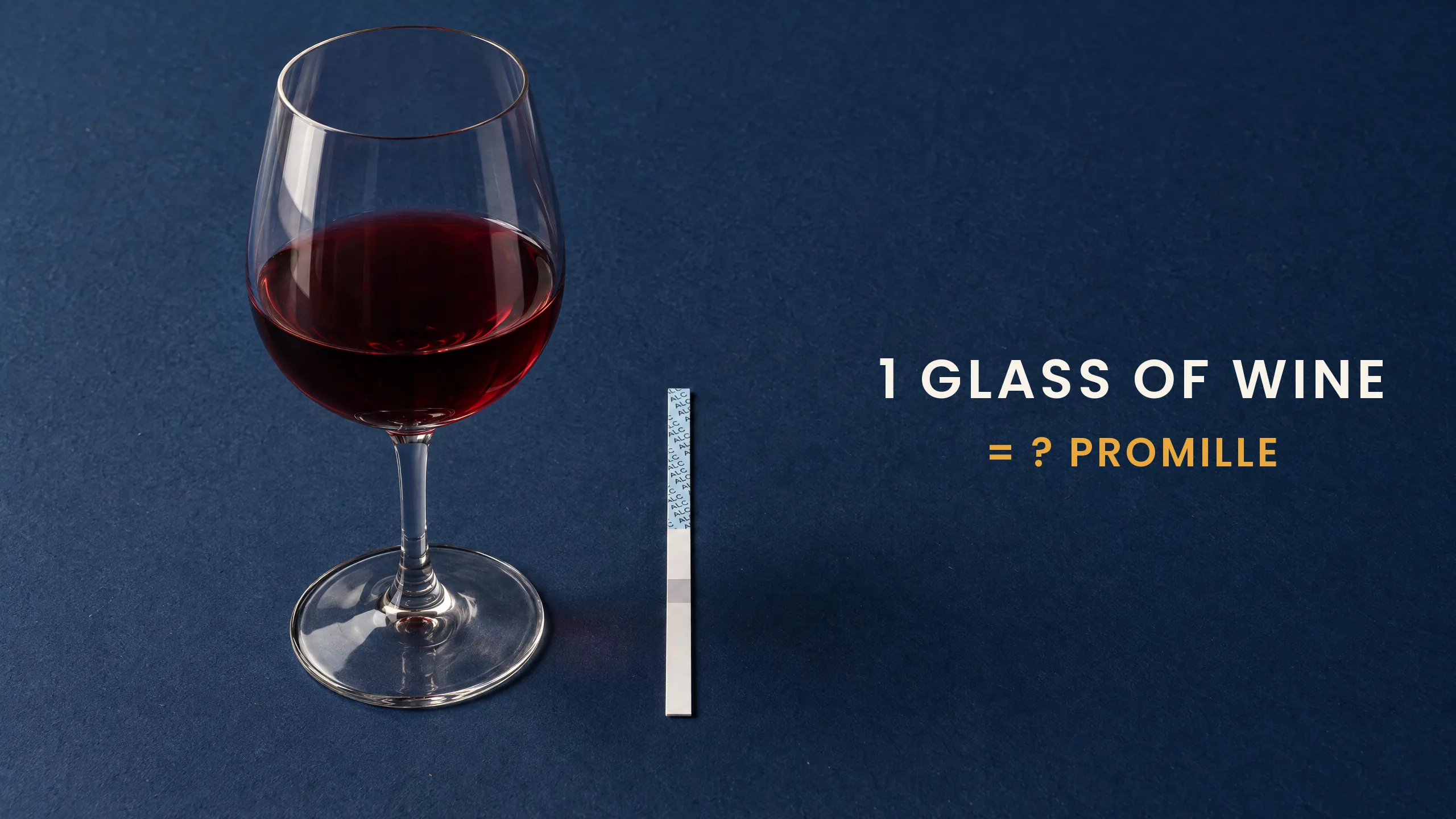
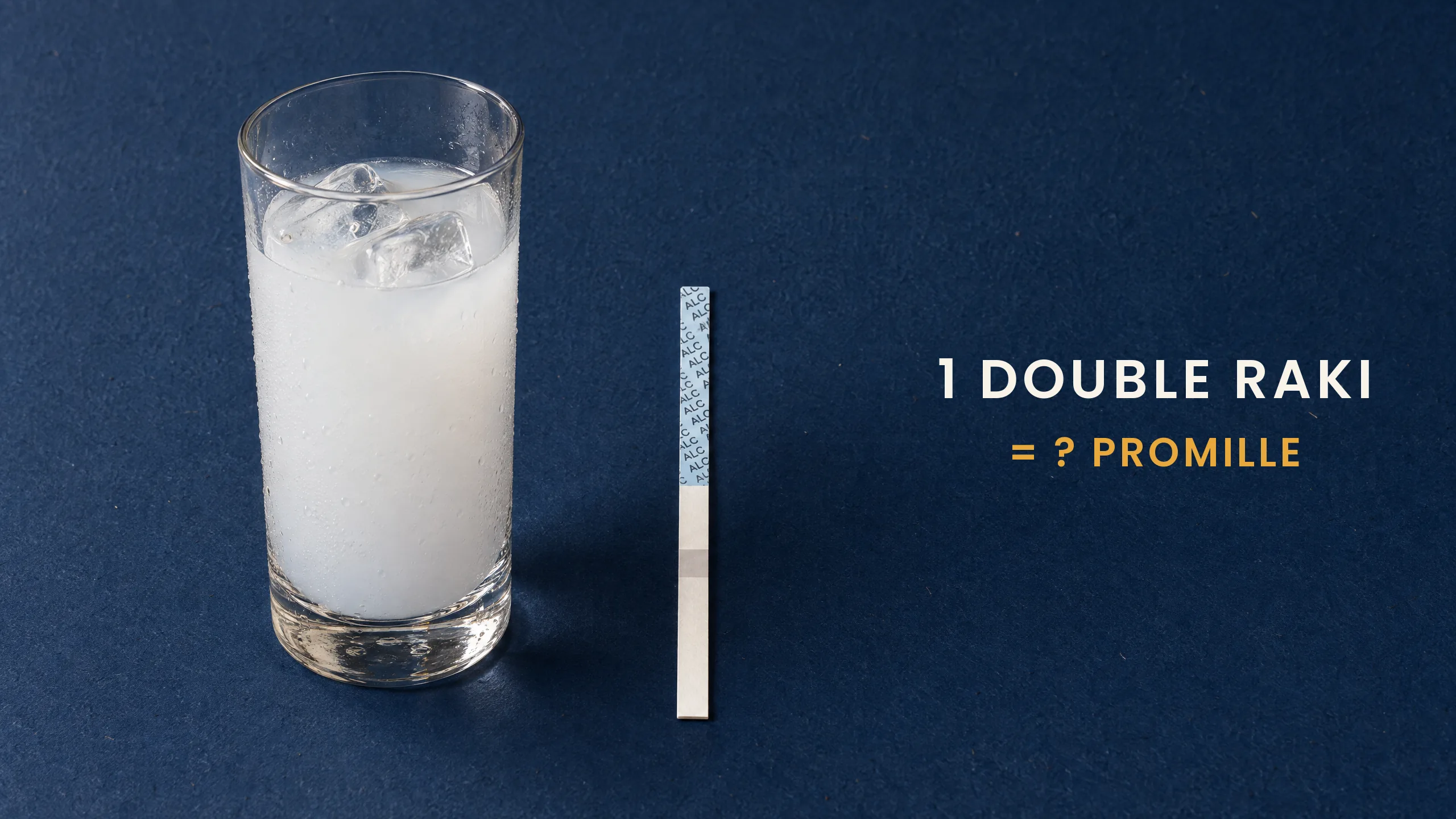
AlkoSafe saliva alcohol test
For a personal check without buying a device: the AlkoSafe saliva alcohol test. Its stated detection threshold is 0.20‰.
- 5 test strips$12.76 $2.55 per stripAdd to cart
- 10 test strips$21.56 $2.16 per stripAdd to cart
- 20 test strips$34.10 $1.71 per stripAdd to cart
Personal saliva screening does not replace an official alcohol test. A negative result does not show that driving is safe.

